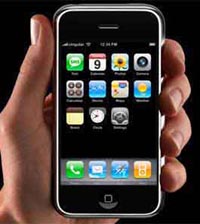
10 reasons why the iPhone might flop
On the 9th of January Apple announced the the long-waited iPhone. Packing up to 8 GB of memory, a 3,5 inch touch screen with a virtual keyboard, Wi-Fi capabilities and running Apple’s OS X software the device was acclaimed both by the Macworld fanatics and by the general public. Apple’s stock price, in fact, soared right after the unveiling, going up by 7%.
Considering all the buzz that the iPhone generated we can assume that it will disrupt the mobile phone industry and make Apple hit the jackpot again, can’t we? Well, I would not be so secure about that. While I admire Steve Jobs’ initiative to invade a challenging business such as the mobile phone one, I think that Apple’s strategy has some flaws, and below I will outline each of them:
1. The mobile phone market is not the digital music one: Apple did something unbelievable with the iPod, redefining a whole industry (the digital music one) and placing its MP3 players in hands of more than 70 million people. No wonder they are so confident about exporting the iPod success into new segments. When Apple entered the digital music segment in 2001, however, there were no dominant players and the segment was relatively immature. Most of the people purchasing an iPod had no prior experience with MP3 players, meaning that Apple only had to convince them about buying the product (and not about ditching an existing one). The mobile phone industry represents quite a different situation, where virtually every single person already has a phone, sometimes with complex subscriber plans on the background.
2. Competition will be fierce: do you remember Diamond Multimedia or Sensory Science? Probably not, but those were the companies producing the first MP3 players, and they were also the competition Apple faced when it decided to enter the digital music industry. The iPhone, on the other hand, will face competition from the likes of Nokia, Motorola and Samsung. Those players do not only have deep pockets, but they are also among the most innovative and design-oriented companies in the world.
3. Apple’s user experience will be affected by Cingular’s user experience: analyze Apple’s history and you will see that its success was always derived from the ability to integrate hardware, software and services. Such integration enabled Apple to create an incredible user experience, like in the Mac-iPod-iTunes combo. The iPhone, however, will enter the market through Cingular, meaning that the service part of the equation will no longer be under Apple’s control. This will reduce Apple’s flexibility and it will also force customers to interact with Cingular, which is not as hassle-free as using an iPod, you can bet.
4. The touch screen might not be suitable: are we sure that a 3,5 inch touch screen is suitable for a mobile phone? If you consider how the average person uses a mobile phone you will see that the object must be somewhat resistant to shocks and scratches, after all it is constantly being handled, getting inside and outside of pockets and bags and sometimes even falling to the ground. Apple already had trouble some time ago when customers who bought the iPod Nano started complaining about how easily the screen got scratched.
5. Lack of a keyboard: whether you like it or not most people use the mobile phone to make calls and to send SMS (Short Text Message). Sometimes you need to make those calls on the run, while walking or driving, and the last thing you would need is to be forced to look at the mobile phone as you dial.
6. The $500-$600 price tag is conflicting with the demand: the iPhone does have a sleek design, a user-friendly interface and a strong orientation towards the entertainment dimension. Those characteristics will certainly make the device appealing for young people. That customer segment, however, is not the segment that spends $600 for a mobile phone. If you take a look at the phones from the four major US wireless carrier operators you will realize that there is no single product selling above $500, and in 2006 the percentage of phones that were sold for more than $300 account for less than 5% of the market.
7. Lack of 3G support: the OS X software coupled with the other features included on the iPhone will enable people to use a myriad of Internet application, bringing mobile connectivity to another level. Well, at least in theory, because in practice Apple will need to solve some issues related to wireless networks. The iPhone will work with 2.5G EDGE networks and not with the 3G UMTS and HSDPA as the latest mobile phones. EDGE networks can carry data up to 340 kbits/s while current UMTS handsets have a bandwidth of 3,6 Mbit/s.
8. Battery life: battery life is an important issue for mobile phones. Apple stated that the iPhone will have up to 5 hours of talk/video/browsing. However, there is no disclosed specification for standby time, nor any real-life performance data confirming those numbers. The large number of features included on the iPhone is making some people wonder whether the battery will have enough autonomy for a day-to-day usage.
9. Lock-in strategy: the iPhone was developed under a lock-in perspective. Should you buy music on the iTunes it will come with the FairPlay copy protection (even the music industry is starting to understand the drawbacks of strict DRM). Secondly, unlike with the Treo or other smartphones, you will not be able to touch the software of the device. Lastly, the iPhone is also locked to Cingular’s wireless network, meaning that consumers will not be able to switch to another carrier.
10. Apple will need to live up to the expectations: Apple stated that they want to sell 10 million iPhones in the 2008 fiscal year. That is not an unrealistic number considered that mobile phone manufacturers are expected to ship almost 1 billion units in 2007. Should they fail to reach that goal, however, it will become a huge disappointment. Just for the sake of comparison, Research in Motion sold 5,5 million Blackberries over the past 12 months, and people call them Crackberries…
Email Subscription
[…] You can read the complete list here. […]
wow, finally a reasonable and well thought out critique of the iphone. i don’t agree with all your points and i think 1 and 2 are basically the same thing, but you’ve made some valid criticisms.
some counter points
#6 - valid, but i would point out that at $399 the original ipod was $100 over the nearest competitor who had a larger hard drive (physically and capacity).
#7 i think 3g is going to be dependent on coverage. i think that’s silly and they should release it now anyway, and who knows maybe they will. there’s 6 months fo ship.
#8 apple claims 16 hours of music playback, so i would assume that standby mode isn’t too shabby — double/triple?
[…] Source: Daniel Scocco Filed under Blog by […]
#1: Most great inventions merely integrate & improve on existing technology. Even Blackberry was just integration of digital daytimer and cellphone.
#2: No one has yet shown that they can compete with Apple’s interface usability.
#3: “This will reduce Apple’s flexibility” How?
#4: Keyboards use up valuable space. Most users in the iPhone audience would give that up in a heartbeat to video space.
Anyway, you don’t think the touch screen was the first thing to be cleared of any issues by Apple engineers & designers?
#5: iPhone is clearly designed for people who are using their eyes to use the device. Keys have been outdated for years.
#6: Agree with Dashiel.
#7: Are you kidding? This is so not a concern.
#8: See above.
#9: Again, what’s your point?
#10: Apple shipped 14 million ipods last quarter. You don’t think they can hit less than that in a whole year?
dashiel I agree with you at some points.
Brian, #3 will reduce Apple’s flexibility because it will not be able to play around with the service parameters as it does with iTunes for instance. One of the advantages of the iPod is that iTunes offer a great experience to complement the product, and I am not sure Cingular will do the same.
I apreciate your counter-points, it adds to the discussion.
Okay, Daniel; good point. I expect Cingular will be able to deliver; they’ve now got major offerings from Apple and Samsung.
Regarding point #3, Apple got Cingular to agree to this site unseen as well as do some re-engineering on their own network for the voicemail feature. Additionally, Apple has demonstrated some very specific features for this phone, and I’m sure they were and will remain adamant that Cingular allows these features. It would be foolish to show off Google Maps, for example, only to have Cingular disable that feature in favor of something they can charge for.
Regarding #9, they would’ve been locked to whichever carrier they signed on to, and negotiating with *all* of the carriers would have been a nightmare, and that’s if the negotiations actually went well. I think Apple is banking on this selling well (and by well, I mean hitting their 10 million goal) and using that to negotiate with the other carriers to bring either the same features or new features to the device if/when they want to expand. Everyone’s griping about Cingular, but it seems to me to be a case of “better the devil you know than the one you don’t.”
Andrew, I agree what you say about point #3.
Regarding #9, do you remember when Google CEO said that in the future mobile phones would be free and based on advertising? Well, Apple try to leverage something like that, creating a partnership with Google to leverage contextual advertising and offer the price for a reduced price, maybe even buying wireless connectivity from large carriers to resell it. But that is just speculation, I agree that Cingular was probably the easier way to enter the market.
#1: “The mobile phone industry represents quite a different situation, where virtually every single person already has a phone, sometimes with complex subscriber plans on the background.”
The MP3 Player market after Apple entered it is now at least 7 years old and still nobody has produced an iPod killer… Don’t you think every single person by now has had the chance to compare different MP3 players and ask yourself, why is Apple still on top?
#2:”The iPhone, on the other hand, will face competition from the likes of Nokia, Motorola and Samsung. Those players do not only have deep pockets, but they are also among the most innovative and design-oriented companies in the world.”
Nokia, Motorola and Samsung are feature oriented, they have not the least ability to deal with usability and UIs. I have a recent Nokia and the software that runs it is still as useless and confusing as it was in 2000. That is why I never use any functionality other than to phone or to text. And even that is a pain. I company who concentrates on usability and has real experience with UIs will run all of those guys you named ragged. Plus all those companies depend on the phone companies retail outlets, which means they have less control over real features than Apple has.
#3: “The iPhone, however, will enter the market through Cingular, meaning that the service part of the equation will no longer be under Apple’s control.”
As I said above, Apple will have far greater flexibility than any existing phone company. Did you see the Phone messaging features? That is a feature I would pay for because it will save me real time and aggravation.
#4: “Apple already had trouble some time ago when customers who bought the iPod Nano started complaining about how easily the screen got scratched” _ And? Did that diminish Apples position in the market? I bet they learned a lot from that costly mistake and used the experience when designing the iPhone. But all phones are fragile, densly packed devices, if you make them sturdier they will get bigger. It’s always a compromise.
#5: “Sometimes you need to make those calls on the run, while walking or driving, and the last thing you would need is to be forced to look at the mobile phone as you dial.” If you are ‘running, even walking, and especially driving you got no business texting on your phone. People like that end up in terrifying accidents for a reason. The touch screen is the way to go, in five years no phone will have a hardwired keypad. If you want a big screen in a small device you will need touch screen input.
#6: “That customer segment, however, is not the segment that spends $600 for a mobile phone” If you are saying that teenagers won’t be Apples initial target market, you may be right. The target market is people who are prepared to spend extra money on a phone they really want, either for vanity or for the simple reason that they make the calculation that having the perfect combination of phone and iPod is just right for them. Prices will fall eventually. But never expect Apple to go for the budget market.
#7: “The iPhone will work with 2.5G EDGE networks and not with the 3G UMTS and HSDPA as the latest mobile phones.” That really is a shame but will quite like change.
#8: “However, there is no disclosed specification for standby time, nor any real-life performance data confirming those numbers.” Hello? The phone is not out yet so there won’t be any ‘real life’ unbiased benchmarks yet. Anyway, with that amount of time to go yet that will depend on the technology available at the time.
#9: “the iPhone was developed under a lock-in perspective.” All phones are designed under that perspective. The phone gets subsidised by the phone company so that they can recoup the price of the phone by your two year contract. Apple locks out outside software so they can control the reliability and of course the market for software for the device. It is part of the business plan for a project.
#10: “Should they fail to reach that goal, however, it will become a huge disappointment.” Apple give a reasonable yardstick for themselves and others to judge the success or failure of the product. That is a fair thing to do surely? I read a lot of put-downs of the iPhone but very few distractors are actually willing to define what they regard as ‘failure’. Give us your projected numbers so we can see whether you are better than Apple to predict the numbers at the end of 2008.
Thanks for the article, I may not agree with your conclusions but it has been a worthwhile read.
FYI- Diamond Mulitmedia is alive and well in the US and is presently making its way back to Europe.
Unlike the Diamond MP3 player venture, which was 5 years ahead of its time, I believe Apple’s timing is as good as you can get.
You, my friend, are a negative nellie. Be more optimistic~~~
Bel, thanks for extensive counter-point list. Most of them are valid also.
Terry, I knew was still operating, but not too many people remember it, and my point was not to diminish Diamond, but just to say that the phone industry has much larger players like Nokia.
Chubbs, I am neither hoping for the iPhone to flop nor for it to sell like there is no tomorrow. I am just analysing Apple’s strategy (separate facts from feeling, and I do have Apple products by the way).
“do you remember when Google CEO said that in the future mobile phones would be free and based on advertising? Well, Apple try to leverage something like that, creating a partnership with Google to leverage contextual advertising and offer the price for a reduced price, maybe even buying wireless connectivity from large carriers to resell it. But that is just speculation, I agree that Cingular was probably the easier way to enter the market.”
Daniel, I don’t actually remember that, however I have heard others mention it as well. I think ads on phones are going to simply be an annoyance, and I highly doubt that the mobile phone industry will go that route, they have a fine business already. But your phone and your desktop are two places you probably don’t want to see advertisements no matter how unobtrusive or contextual they are.
Andrew what you say is partially true, but if someone offered me a mobile phone for free, with a plan where voice calls are free as well and data traffic is paid, and all of that in exchange for contextual ads being displayed here and there I would not think twice before switching to it.
Actually some people calculated that the annual cost of having an iPhone will be close to $2000, and not too many people spend that amount annually.
The average cell phone bill is $600-$700/year for just voice, text, and email. Will consumers pay a bit more than double for a device that combines voice, text, video, music, calendar, chat, data, etc.? That remains to be seen. Definitely with the CEO set; perhaps not as much with your younger crowd.
But enter advertisers, who haven’t taken to mobile ads because of the technology limitations and comsumer acceptance of high-tech devices, until now. They will indirectly lower the cost of these things, because they will simply love being able to deliver highly targeted ads based on user info.
[…] Apart from negative opinion I think iPhone will follow his precedessor success, iPod. But its little bit overexagerated, about what they claim as revolutionary phone, is not revolution at all. […]
Okay… so the $500 price tag may be a bit out of reach for a phone… but it’s not a phone - it’s a phone, iPod and internet device. The ipod portion alone is worth $200 and then the phone/internet device makes up the other $300 easily.
At these latitudes no way for the iphone, but just a comment: I have a SonyEriccson T610 (unbeliveable!) No phone in the market has given me a good reason to change after more than 5 years with this phone, not even Treo and Blackberry (too bulky and more of the same). Iphone (although not available to LA after maybe 10 years) make me to consider the change!